
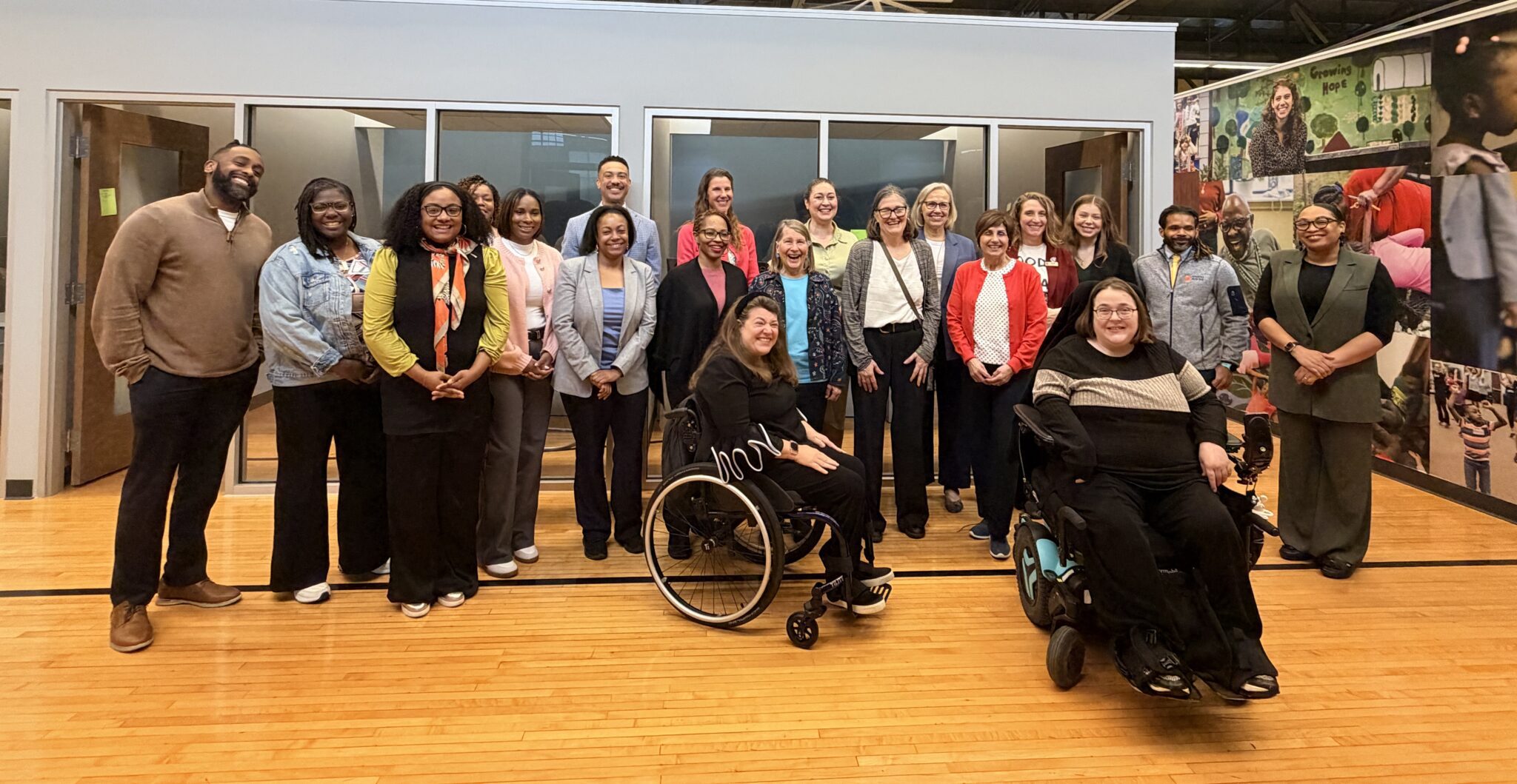
Legislative Day at the Michigan Capitol
Nonprofits work closely with and within their communities, often developing a unique and invaluable understanding of the needs and lived experiences of the people they serve. Many are from the community. That’s why the Health Fund continues to invest in efforts that elevate nonprofit voices in health policy discussions at the state and local levels.
For several years, this has included support for nonprofit leaders to participate in the health policy fellowship led by the Center for Health & Research Transformation at the University of Michigan. This year-long experience offers an in-depth understanding of the legislative processes that influence health policy in our state, while strengthening participants’ capacity to engage in policy discussions, advance evidence-informed solutions, and work for change at community and state levels.
Building on this commitment to expanding policy capacity in individuals, the Health Fund has also invested in efforts that support nonprofits at the organization level.
GRANTS SUPPORT NEW POLICY CAPACITY BUILDING EFFORT WITH DETROIT URC
Over the last year, we’ve collaborated with the Detroit Community-Academic Urban Research Center (Detroit URC) — a longstanding community-based participatory research partnership — to equip community-based organizations with new tools that enhance their health policy efforts.
Through an initiative called Advancing Change, four community-based nonprofits received $30,000 Health Fund grants to develop and implement community-driven policy change strategies as part of a year-long cohort program facilitated by Detroit URC specialists. One year into the initiative, participating organizations have strengthened their policy skills, expanded their influence, and engaged legislative leaders on key health concerns affecting their communities.
Participants learned through workshops, mentorship, and technical assistance, including virtual meetings with a pair of community and academic mentors who collaborated to provide guidance and expertise. Throughout the year, facilitated co-learning and strategy sessions also gave organizations opportunities to learn with and from one another, refining their approaches and building a valuable network of peers.
DEVELOPING COMMUNITY-DRIVEN STRATEGIES
At the outset of the process, each organization identified a specific area of policy interest that was informed by voices in their communities. These included:
- The Ecology Center focused on efforts in Detroit and statewide on improving lead testing and lead poisoning prevention, aiming to reduce the impact of lead exposure on children and families.
- Ypsilanti-based Growing Hope worked to improve food sovereignty within Washtenaw County, including the right to grow food, a senior bill of rights, food justice reform, and land use reform.
- Grand Rapids-based KConnect worked on supporting educational tools in Kent County to promote the importance of the 31n funding program, which enhances and expands mental health services for K–12 students.
- The Michigan Disability Rights Coalition focused on statewide efforts to improve access to assistive technology (AT) and support changes in how AT policies, services, and funding are organized, managed, and distributed.
It’s important to note that the Health Fund had no role in influencing these choices or directly advocating for them; grantees shaped their own priorities in partnership with their communities. Our role is to provide resources that help them build knowledge and capacity, so community voices can be elevated and amplified.
LEGISLATIVE DAY HELPS DRIVE EARLY OUTCOMES
In May, members of the cohort traveled to Lansing for a legislative day at the Michigan Capitol. Organizations met in teams with legislators and staff from both political parties about their priority issues, putting the strategies they’ve developed with their cohort into practice.
In total, teams met with 14 different legislators or legislative staff. Among other outcomes, members of the group reported that they built important relationships in the legislature, strengthened policymaker awareness of their issues, and created opportunities for future engagement.
And while policy change can be a long process, requiring patience and commitment, some participants shared promising short-term results supported by their participation in the Advancing Change initiative. One highlight is from the Ecology Center team, who reported that three of the four bills they supported on lead testing and lead poisoning prevention were advanced by the House Health Committee and await a vote in the full House.
OUR FUTURE POLICY APPROACH
Through initiatives like the Detroit URC Advancing Change cohort, we aim to help ensure that policy discussions are informed by the lived experiences of the people most affected by health challenges.
By investing in trusted community organizations and the leaders closest to these issues, we can help them build the relationships, knowledge, and confidence needed to advance community-driven solutions that improve health outcomes over the long term.